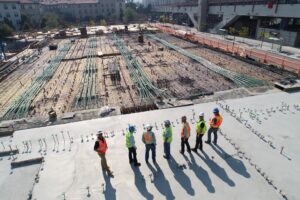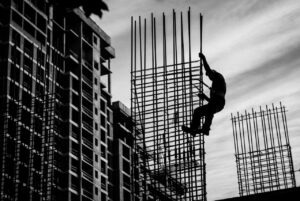






The number of workers in the construction industry in 2026 reached 8.3 million people, climbing significantly in recent years. The average age of these workers was 42.7, slightly higher than the average for all other industries combined. Construction work is a dangerous occupation. Workers face numerous safety risks inherent in the jobs they do.
Out of the 5,070 on-the-job fatalities in 2024, 1,034 (about 20% of the total) occurred in the construction industry. Looking at job roles instead of industry, construction and extraction workers experienced 1,032 fatalities in 2024. There is some good news. The fatal injury rate for all U.S. workers dropped to 3.3 deaths per 100,000 full-time equivalent workers, the second yearly decrease in a row. Still, one in five workplace deaths happening in a single industry shows how much risk construction crews carry. Age plays a role, too. In 2024, workers 55 and older accounted for 1,855 of all fatal work injuries nationwide, more than a third of the total.
Let’s break down the main causes of construction accidents.
The Focus 4 for the Construction Industry
The Occupational Safety and Health Administration identifies four types of accidents that result in the highest losses on construction sites. These four accident categories are:
- Falls
- Struck-by
- Electrocutions
- Caught-in or caught-between
1. Fall Hazards
Fall hazards aren’t unique to the construction industry, as employees in all environments encounter surfaces, obstacles, or situations that could cause a person to fall. According to OSHA, falls cause 40% of construction worker fatalities.
In 2024, according to the National Census of Fatal Occupational Injuries in 2024, falls, slips, and trips killed 389 workers in the construction industry, roughly 38% of all construction deaths. Most of them, 373, were falls to a lower level. Among construction and extraction workers, fatal falls, slips and trips decreased 7.5% to 370 in 2024, down from 400 in 2023.
Height makes a big difference. Across all industries, 10.8% of fatal falls in 2024 happened when a worker fell from more than 30 feet. Roofs, ladders, and scaffolding have historically been the most common starting points. In 2019, for example, 146 construction workers died after falling off a roof, 93 died falling from ladders and 52 died falling off scaffolding.
OSHA regulations require construction sites to provide fall protection for any surface more than 6 feet off the ground. Contractors are obligated to ensure the structural integrity of work surfaces and utilize protective measures such as guardrails, personal fall arrest systems or safety nets.
Falls, slips and trips also lead to many non-fatal injuries, accounting for 32% of all injuries in the private construction industry that resulted in lost work time in 2019. The median number of missed workdays was 28. A total of 13,770 workers were injured after falling from a higher level to a lower one, a significant increase the 11,960 injuries the year before. 7,400 people were injured after falling on the same level, while slips and trips accounted for 3,620 accidents.
2. Struck-By Hazards
Struck-by hazards refer to a worker being hit by a falling, flying, rolling or swinging object. Falling objects are common on construction sites, especially when scaffolding, ladders, and cranes are present. Flying objects also pose a significant risk. Power tools are one source of flying debris, whether it’s nails fired from a nail gun or wood chips from a table saw.
Injuries and deaths from rolling objects include those that occur when a moving vehicle strikes a worker in the work zone. These can happen when the driver puts the vehicle into reverse and doesn’t see anyone behind the truck, car or construction equipment. Construction sites often have mechanical equipment that workers use to move large pieces of material around the site or into place. Frequently, this movement results in swinging objects (such as metal beams) that can strike a worker.
In 2024, contact with objects and equipment, a category that covers both struck-by and caught-in accidents, killed 161 construction workers. Another 67 construction workers died after being hit by a vehicle while on foot.
These accidents happen here in Boston, too. The Boston Globe reported on a Theater District construction site where two workers were seriously injured when a collapsing roof struck them.
3. Electrocution Hazards
This category caused 187 construction deaths in 2024. Construction workers face the following primary sources of electrical hazard:
- Extension cords: Workers use extension cords regularly. The wear and tear from heavy use leads to damaged cords, often with exposed wiring or loose prongs. When workers continue to use these cords, they risk electrocution.
- Energized sources: Electrical equipment, tools and wiring are all potential sources of electrocution at a worksite. Workers who come into contact with live wires or faulty equipment can be seriously injured.
- Powerlines: Whether overhead or buried, powerlines have a high voltage that can cause death or severe burns and shocks.
Often, workers receive their injuries as a result of direct contact with the electrical source. However, indirect electrocution also occurs, which may happen if exposed wiring comes into contact with water or a metal pipe while a worker is handling the equipment.
4. Caught-In or Caught-Between Hazards
This last category in OSHA’s focus four for construction workers consists of accidents that cause a worker to be caught in or caught between two objects. Collapsing materials and cave-ins lead to more fatalities than crushing accidents from sliding, rolling or shifting equipment or objects. These deaths are part of the 161 contact-with-objects fatalities BLS recorded in construction in 2024.

Transportation Accidents on and Around Construction Sites
Vehicles are part of almost every job site. Dump trucks, delivery vehicles, forklifts and work trucks move in and out all day, often in tight spaces and near live traffic. Road crews face an added risk from passing drivers who speed or don’t pay attention in work zones.
Transportation incidents continue to be the most frequent type of fatal work event in the country. In 2024, they accounted for 38.2% of all occupational fatalities, with 1,937 deaths compared to 1,942 in 2023. Roadway incidents involving motor vehicles dropped 8.5% to 1,146. Pedestrian incidents, where a vehicle hits a worker on foot, went the other way. They rose 19% to 369 deaths, up from 310 in 2023.
That rise matters for anyone working on a job site or in a road work zone. In construction alone, transportation incidents caused 244 deaths in 2024, including 67 pedestrian incidents. For construction workers, that means car and truck accidents can happen on the job just as easily as on the commute.
Construction Deaths in Massachusetts Hit a Record High
The national numbers are only part of the picture. Here in Massachusetts, 2023 was one of the worst years on record for workplace deaths. The state saw 111 fatal work injuries, a 37% increase from the previous year and the highest number since 2016.
Construction took the heaviest toll. The industry accounted for 33% of all fatal work injuries in the state (37 deaths), far ahead of transportation, warehousing and utilities at 11% (12) and professional and business services at 8% (9).
Those 37 deaths are the highest number of construction fatalities in the records of the state’s Workplace Fatality Program, which date back to 1991. That’s a 76% jump from 2022 and part of a steady rise over the past three years. The fatality rate for Massachusetts construction workers was 14.6 deaths per 100,000 full-time workers, more than four times the statewide rate of 3.3.
The causes look a lot like the national trends
- Falls were the leading cause of construction deaths in Massachusetts in 2023, at 30% (11 deaths)
- Motor vehicle crashes accounted for 19% (7)
- Struck-by incidents for 13% (5), and one worker died after being caught in equipment.
Nearly a quarter of these deaths (24%) involved workers aged 55 to 64. Behind each of these numbers is a coworker, parent, or neighbor who went to a job site somewhere between Boston and Plymouth and didn’t come home.
The Impacts of Non-Fatal Injuries
OSHA’s focus four hazards for construction highlights the significant risk workers in the industry face. The four biggest hazards lead to the highest number of fatalities every year. However, construction workers often sustain serious injuries that are less likely to result in death. These injuries can still lead to significant losses.
In 2019, 112.3 out of every 100,000 full-time-equivalent construction workers were injured on the job, leading to 79,660 non-fatal injuries. The rate of injuries is higher than in any other industry, except for agriculture. Contact with an object or equipment was one of the leading causes of construction accidents with non-fatal injuries, with more than 26,000 reported in 2019, followed by falls, trips and slips.
Work injuries have a significant physical and financial impact. According to the National Safety Council, the total cost for workplace injuries in 2019 was $171 billion. This figure includes medical expenses, administrative fees and lost income. A large percentage of these expenses would have come from the construction industry, given the rates of injuries in the industry compared to other sectors.
The Benefits of a Personal Injury Lawyer
Massachusetts requires that all employees be covered under workers’ compensation insurance. According to the state, anyone who works for another under any sort of contract, even if it is an oral agreement, is considered an employee. For the purposes of workers’ compensation, construction workers are presumed to be employees. Workers’ compensation should cover their on-the-job injuries. Often, general contractors and insurance companies attempt to deny workers’ compensation claims or limit an injured worker’s benefits.
A personal injury lawyer who has experience with construction site accidents and knows Massachusetts workers’ compensation laws can help you fight for full compensation. Benefits for a work injury include coverage for medical expenses and lost wages, as well as rehabilitation training, job retraining and disability when necessary.
The Personal Injury Lawyers You Can Trust
At Jason Stone Injury Lawyers, we have extensive experience with the causes of construction accidents and site injuries and in Boston. We’ll fight to get you the compensation you need. We understand the financial burdens involved when you get injured at work. Our Stone Cold Guarantee means that we don’t get paid until you do. If you’ve been hurt in a construction site accident, get in touch with us today. There’s no obligation, just information.
Not Trusting What You’re Being Told?
Better Phone Stone
(800) 577-5188
 START MY NO OBLIGATION CONSULTATION